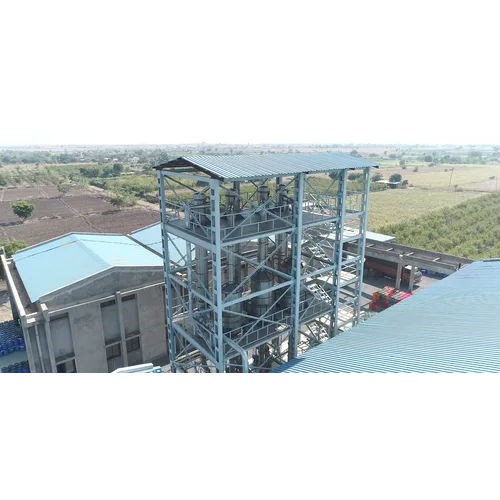
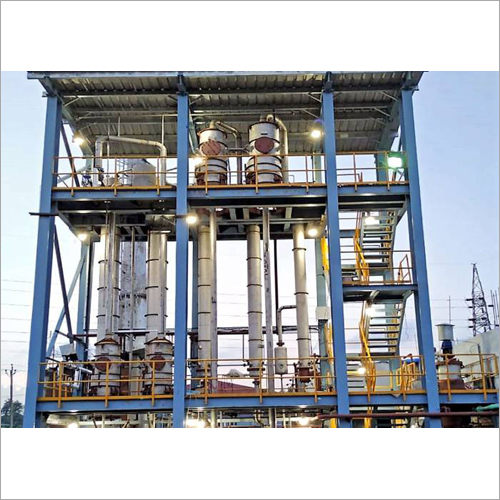
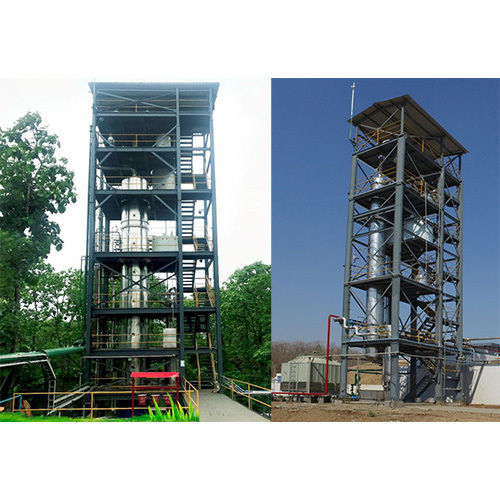
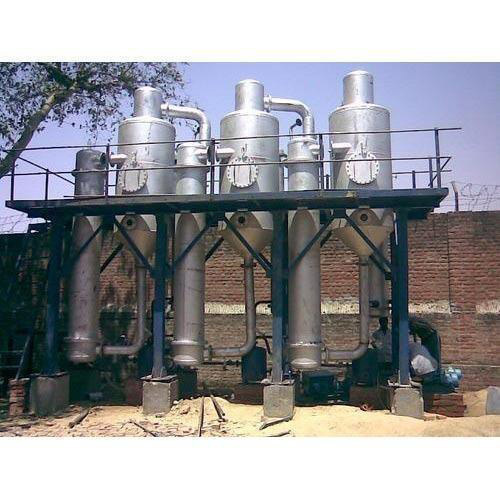
About Solvent Recovery Plant
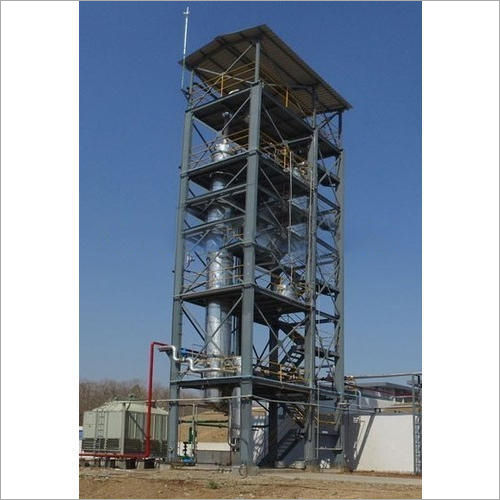
This well equipped solvent recovery plant is useful for extraction of solvents from streams of effluent for re-usage purpose. This plant is useful for recovery of methanol, acetone, paint based lacquer and various other types of solvent materials that have maximum 375 degree F boiling point. Automatic operation and pioneering solvent recovery technology of this plant prevents its emission to avoid air pollution. PLC baaed operation of this machine reduces labor cost and improves production quality. Pioneering recovery technology of this plant helps to deal with global warming and also promotes re-usage of natural resources. Continuous operation, stable performance, low noise generation and ergonomic look are some of the key aspects of this plant.
Product details
- Model : CP-SR
- Usage/Application : Chemical Industry
- Automatic Grade : Automatic
- Capacity : 4000 LPH
- Size : 5 m x 2 m
- Brand : CentPro
- Warranty : 1 Year
- Material : Stainless Steel
Our solvent recovery plants are engineered to suit diverse production environments. Whether your operation requires a skid-mounted, mobile solution or a fixed installation, the design adapts to your available space and specific industrial needs. Customizable capacities and multiple discharge and feed options allow seamless integration into new or existing process streams for maximum efficiency.
Advanced Automation & ControlEquipped with PLC or relay-based control panels, these plants support both automatic and semi-automatic operations. Operators benefit from precise process regulation and easy interfacing, which enhances both performance and safety. Automation enables remote monitoring and reduces the chances of human error during solvent recovery.
Safety & Efficiency in Every OperationSafety is prioritized with optional explosion-proof components and durable construction. With the ability to operate at pressures up to 6 bar and temperatures up to 150C, these plants safeguard both personnel and assets while ensuring a high solvent recovery rate, thereby reducing operational costs and environmental impact.
FAQ's of Solvent Recovery Plant:
Q: How does the solvent recovery process work in your plant?
A: The solvent recovery plant utilizes either packed or tray distillation columns along with condensers to separate and reclaim solvents from process streams. By applying controlled heating through steam or electric sources and condensing vapors via water or air-cooled units, the system efficiently recovers usable solvent with up to 98% efficiency.
Q: What are the benefits of using a solvent recovery plant in industrial applications?
A: Implementing a solvent recovery plant reduces raw material costs, minimizes environmental impact, and ensures compliance with regulatory norms. It helps industries safely reclaim valuable solvents, thus enhancing sustainability and optimizing production expenditures.
Q: Where can the solvent recovery plant be installed, and what area is required?
A: The plant can be installed in pharmaceutical, chemical, paint, agrochemical, and similar processing facilities. The required area varies according to the specific design and capacity selected, ensuring flexible installation within your available space.
Q: What safety features are incorporated in the solvent recovery plant?
A: For enhanced safety, the plant can be equipped with optional explosion-proof components, robust stainless-steel construction, and automated controls. This safeguards operators and the environment, especially when handling volatile or hazardous materials.
Q: How is the plant operated and controlled during the solvent recovery process?
A: Operation can be either manual or automated, depending on your preference. The system is managed via PLC or relay-based control panels, offering automatic or semi-automatic operation for accurate control over temperature, pressure, and process parameters.
Q: When is it advisable to use batch or continuous discharge methods?
A: Batch discharge is ideal for operations with variable or smaller volumes, while continuous discharge suits high-throughput processes with consistent solvent flows. The choice depends on your production scale and workflow requirements.
Q: What factors influence the power consumption and operating temperature of the plant?
A: Power consumption depends on the plant's capacity and process demands, while the operating temperature ranges from ambient to 150C, determined by the type of solvent and recovery process involved.







 English
 Spanish
 French
 German
 Italian
 Chinese (Simplified)
 Japanese
 Korean
 Arabic
 Portuguese
 Send Inquiry