About Zero Liquid Discharge Plant
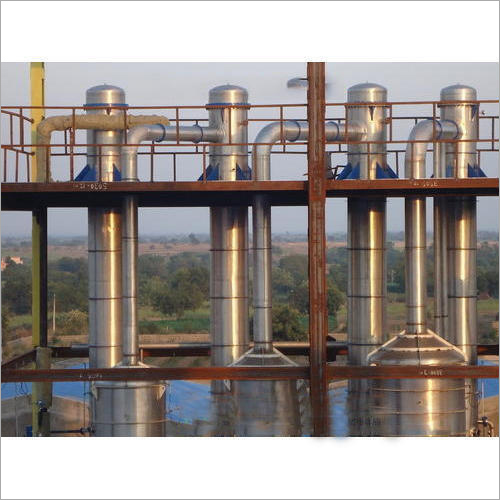
Zero-Liquid Discharge Plant is provided for carrying-out water treatment processes in which the wastewater is purified and recycled. This is designed leave zero discharge at the end of the treatment. This system includes varied processes such as evaporation/crystallization, ultrafiltration, reverse osmosis and fractional electrodeionization.
Product details
- Usage/Application : Pharmaceutical Industry,Textile and Dyeing Industry,Chemical Industry,Tannery Industry etc
- Feed Flow Rate (cubic-meter/day) : 101 - 500 m3/day
- Capacity Inlet Flow Rate (cubic meter/hour) : 10000 m3/hour
- Voltage : 380V
- Frequency : 50 to 60 Hz
- Brand : CentPro
Employing membrane technology alongside a multi-effect evaporator, our ZLD Plant delivers sustainable industrial effluent management by achieving zero liquid discharge and recovering valuable salts. Designed with modularity and resilience in mind, the plant can operate effectively over a wide range of conditions and industrial requirements, delivering compliance, efficiency, and longevity.
Customizable for Diverse Industrial NeedsRanging in capacity from 1000 LPH to 50,000 LPH, our plant accommodates process water, industrial effluents, and wastewater. The modular skid, containerized, or custom-built models ensure seamless integration with existing operations, while components like feed TDS up to 80,000 ppm and PLC-based HMI controls guarantee adaptable and remote-monitored operation.
FAQ's of Zero Liquid Discharge Plant:
Q: How does the Zero Liquid Discharge (ZLD) Plant achieve compliance with CPCB norms?
A: The ZLD Plant integrates advanced membrane technology with a multi-effect evaporator to recover up to 95% of water while handling rejects through salt recovery or crystallizer options. This setup ensures all discharge meets or exceeds CPCB zero liquid discharge standards, preventing environmental contamination.
Q: What are the main benefits of using this ZLD Plant in industrial wastewater treatment?
A: Key benefits include extremely high water recovery, compliance with stringent environmental regulations, low operational noise, easy modular servicing, and a robust, long operational life. It also allows for the recovery of salts and valuable by-products, reducing waste management costs.
Q: When is pretreatment necessary for the ZLD Plant, and what options are available?
A: Pretreatment is always recommended to ensure optimal membrane life and plant performance. Available pretreatment options include screening, softeners, and ultrafiltration (UF), chosen based on the specific characteristics of the industrial effluent or water source.
Q: Where can this ZLD Plant be installed and what installation types are supported?
A: The plant is suitable for industrial sites where effluent and wastewater treatment is required. It is available in containerized, skid-mounted, or fully customized forms as per the client's infrastructure and site requirements, ensuring flexibility in deployment.
Q: What is the typical process flow within the ZLD Plant?
A: The process starts with optional pretreatment (screening/softening/UF), followed by membrane filtration. The permeate undergoes further concentration in multi-effect evaporators, and the solids or salts are recovered through crystallizers if needed. The entire operation can be controlled automatically or semi-automatically via a PLC-based HMI, with options for remote monitoring.
Q: How does the plant adapt to various industrial water sources and applications?
A: The system is engineered to treat a wide range of feed waters, including industrial effluent, process water, and general wastewater, with customizable flow rates and modular design. Its adjustable pH handling (6.5-8.5) and broad feed TDS capacity accommodate diverse industry requirements.
Q: What are the maintenance and operational requirements for the plant?
A: The modular design allows for easy servicing and routine maintenance. With robust materials like mild steel, SS 304, or SS 316, and a noise level below 70 dB, the plant requires minimal intervention when maintained per guidelines, supporting over 15 years of reliable operation.







 English
 Spanish
 French
 German
 Italian
 Chinese (Simplified)
 Japanese
 Korean
 Arabic
 Portuguese
 Send Inquiry

